

Charter Schools aren't really saviors or destroyers; if anything it's just another tool for parents to have opportunities for their children. Charter schools represent free choice rather than comprehensive reform. They can range from the very best to the very worst, just like public schools. The purpose of charter schools seems to add more options for the current stagnate environment of current public education.

Due to the varying ways schools are funded it's hard to properly quantify how much charter schools are receiving. Usually, most funding is based on the number of students enrolled in the school and their attendance rates. Outside factors such as grants and philanthropy can greatly affect this on a case-by-case basis.
Based on the research I've done, charter schools usually receive less money but are more efficient at spending the funding they receive. The more efficient, higher-performing charter schools will usually
spend less. Third-party funding is usually needed to help these charter schools acquire the funding that the state doesn't give. Charters will commonly be higher on administrative costs rather than instruction. This seems counter-intuitive to the idea that charters can spend less on staff due lack of contract obligations. This higher cost is probably due to the for-profit mindset of some charters.
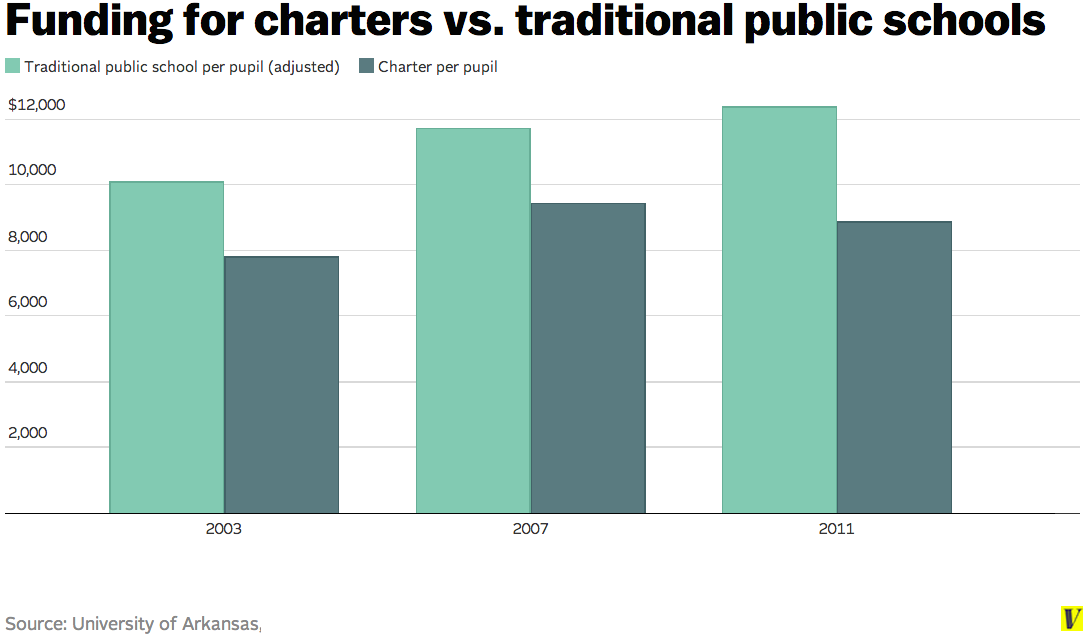
The graph is from this Vox article.
 |
| Harlem Success Academy |
Charter schools don't seem to have any major effects on desegregating schools. In fact, some charter schools help reinforce segregation whether intentionally or not. Students with similar racial and economic backgrounds usually gather together in particular charter schools. This seems to reflect the geographic reality of many of these charter schools who mainly reside in urban areas with a large concentration of minorities. Urban charter schools enroll more minority children while suburban charter schools enroll more white children. Some charters may focus on intentionally serving minority students as a way of helping the community. This only exacerbates the issue of segregation.
 |
| Image from Chalkbeat |

Despite the popular claims that charter schools are either the best or the worst, the truth is that they're just like public schools. Charter schools perform on par with public schools and display a wide outcome of possibilities. If you're a parent trying to decide between a charter school and a public one, it would make more sense to decide based on individual performance rather than just the management style of the school. Some charters don't even have college-minded curriculums that focus on high test performance. A school being a charter doesn't have any inherent effect on its academic performance. If a school is mismanaged no matter what management style it has, it will fail, public or private.

There are claims that charter schools boost their performance by enforcing harsh standards to filter out bad students. Some charters try to enforce high standards upon students which their public counterparts wouldn't implement; requirements like a longer school year and parental participation. Theoretically, students are systematically cherry-picked and the bad ones will either not enroll or will drop out before completing their school years. While it is true that some charters implement high standards, many of them operate in very low-income urban areas that wouldn't naturally produce high-performance students to just easily pluck from. Also, this claim simply can't be applied to all charter schools. Some charters don't even focus on high-grade performance and would rather focus on progressive education. It is possible that cherry-picking is taking place, but it's hard to prove and there needs to be more research on the matter.

One common aspect of most of these charter schools is that teachers often have less job security. This comes with the fundamental idea of charter schools. There is no longer the presence of powerful teachers' unions and contractual obligations. In the charter school system, the only protections they're granted are the ones that the charter operator gives to them. If a teacher is viewed as undesirable or underperforming it is extremely easy for a charter operator to terminate them. This of course isn't absolutely true for all charter schools.
Some charters lack the individual power which is often promoted by the aspect of being a charter. For example, in Milwaukee, there are three different varying levels of autonomy given to charter schools: Instrumental, Non-Instrumental, and Independent. "Independent" charter schools behave like the widely perceived understanding of what a charter school is. On the opposite side of this are "Instrumental" charters, which are much closer to traditional public schools rather than charters. Instrumental charters are heavily over sought by school districts and can't control the hiring of staff or their curriculums; this is still labeled as a charter school despite this.
The responsibilities of professors in charter schools are generally broader. Since these charters tend to hire fewer staff to get better margins, teachers are left with many of the responsibilities that would be occupied by professionals hired specifically for that job. For example, a teacher might also do the responsibilities of a librarian; or a bus driver might also do cafeteria work. All the staff in these charter schools are affected.
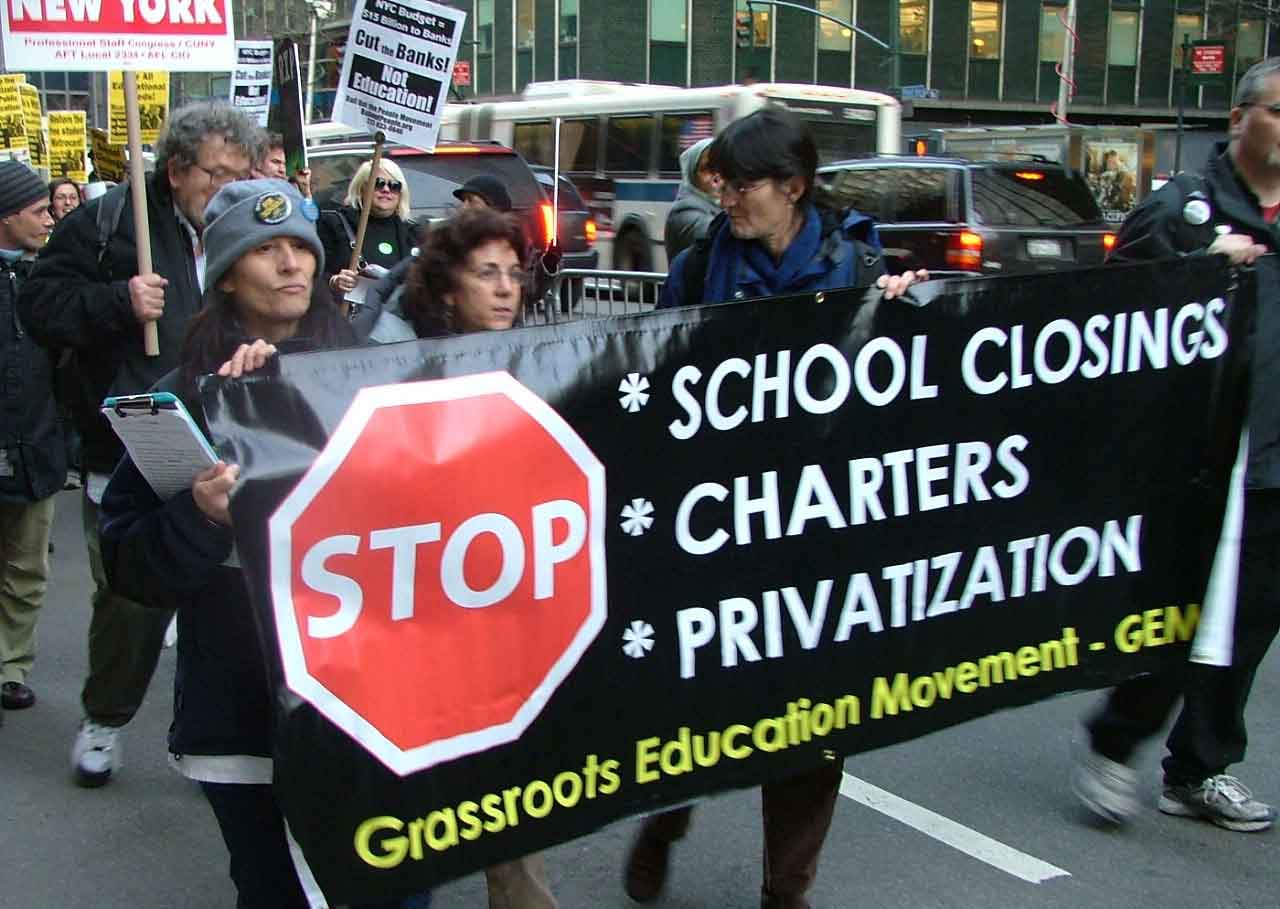
The charter school movement is a very politically controversial issue that lacks a lot of good research. This has resulted in many widespread misconceptions. When I was a kid, I believed many of these common myths. To me, charter schools were just a weird way of saying private schools. I thought they were simply a scheme to give money to rich businessmen and to defund public schools; it was just another "left or right" wing issue. After doing proper research on the topic I realized how much more complicated it is. To first explore this issue we must understand what a charter school is.
Charter schools are publically funded schools that are operated by independent groups. This is a massive departure from the fundamental principle of publically managed schools. Instead of being controlled by local district bureaucracies and teachers' unions, they are controlled by private groups. These schools are still held accountable for some sort of standard set by the individual state. The idea behind this change is that private management can avoid many of the bureaucratic inefficiencies found in many public schools. More efficiency ideally should result in faster management and more money for students. This is a broad idea of what charter schools are considered in the United States but it isn't 100% true.

Around 45 states have authorized charter schools with each state having its own laws on what a charter school is and how they're managed. This means that there is a whole ocean of varying charter schools that have major attributes change from state to state. Each individual charter school has its own goals which may not align with high standardized testing results. A common theme I found in the public analysis of charter schools is that each study usually only focuses on a particular subsection of schools in particular states resulting in varying skewed results. This gives us completely contradictory studies which are technically all correct. There are very few studies that actually attempt to find the average performance of similar charter schools across the whole United States. This usually isn't done maliciously, there are simply too many charter schools to really summarize them all even though they currently only represent a small percentage of actual schools in America. With these blogs, I hope to truly present the actual state of charter schools in the most critical fields.


